



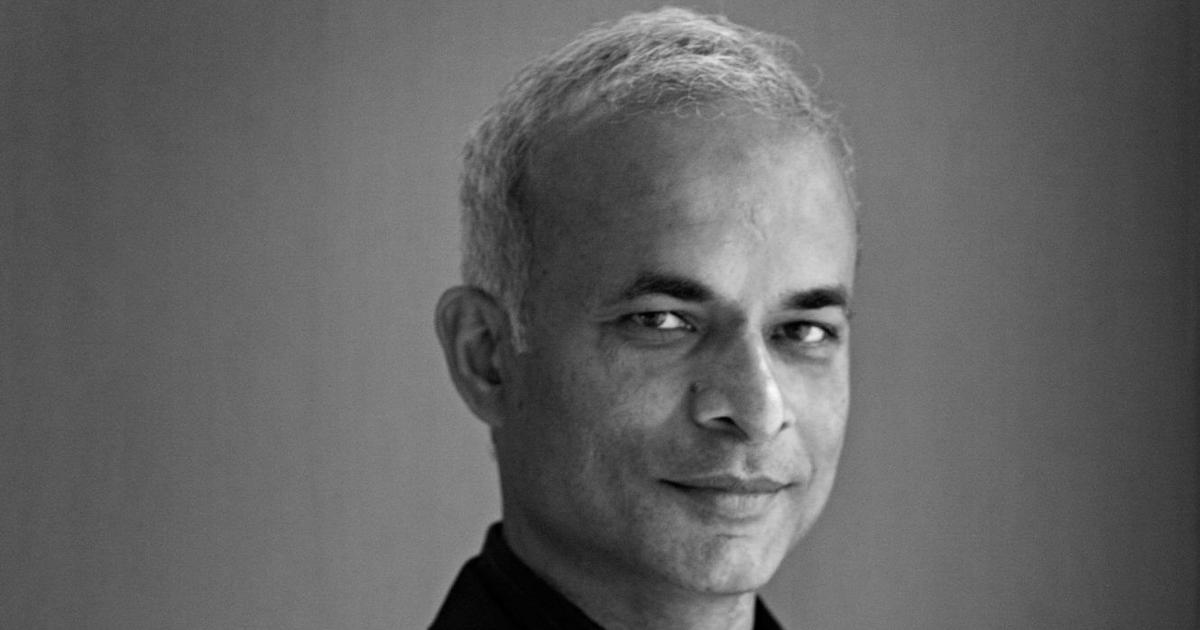
Here’s what I can confidently say about any Manu Joseph book, and I have read them all since Serious Men: I have never not been entertained.
And here’s what I can confidently say about his columns: they are always anticlimactic.
A very fun pop-feminist filmmaker, who does not react with Pavlovian rage at the mention of Manu Joseph, once told me he doesn’t know how to end his pieces. I agreed. Joseph’s first nonfiction book, Why the Poor Don’t Kill Us, shares this quality. But until we reach the end, it is super-fun.
Anger coursing through
Joseph wrote this book for, I think, two reasons.
Why the Poor Don’t Kill Us is essentially all his theories he has cyclically pushed through his essays (the second-best idea in a group is always the best idea; revolutions and reform happen not out of altruism but second-rung elites fighting the top-order elites, etc) put inside a hook-y framework: why the Indian poor doesn’t tear us apart in one of the world’s unhappiest and most unequal regions? As a primer on Manu Joseph, this is useful.
The second is that Joseph currently resides in a posh colony in Gurugram, which is nicely complicated by the fact that he experienced poverty as a young man. Joseph’s relentless distrust of urban currents is a trait of the poor and the provincial. I understand this because I am a “mofussilite” who grew up poor till I turned 16. The sixth pay commission in 2006 and the seventh in 2014 ensured my central government employee father earned enough to get a loan sanctioned to send me to an elite journalism college.
I remember a classmate’s comment on reaching our asbestos-roofed government quarter. I was 14. Until then, I hadn’t dared to bring home any friend from our private English-medium school run by the Kunnumpurams, a Malayali couple. The boy took one glance at the lane leading to our home and said, “How can humans live here?” He immediately cycled back home.
There is an anger coursing through Joseph’s writing, which he successfully hides by needling a section of English-language Indian journalists. That’s where Ayyan Mani (Serious Men) was born; that’s the origin of Miss Laila (in Joseph’s third novel). Because Joseph has seen poverty and affluence closely, and journalism is a profession that allows you to meet a wide range of people, he cannot help but be himself.
In the fourth chapter, I sensed a theory about Joseph’s why-the-poor-don’t-kill-us framework.
This should have been a film. Not a non-fiction book. This struck me on reaching the part about how he felt when his Uber driver stopped the car to relieve himself.
“I was in the car, on the shoulder of an eight-lane expressway that connects the national capital to its most affluent suburb, waiting for a man to finish his defecation. I was introduced to him by a complex algorithm funded by billions in postmodern money. I wondered if that was culture, that moment there, as I was waiting for the man to finish his business. I wondered if economic progress would make such moments vanish – would it not be a destruction of something very Indian? Poverty is not only an economic condition; it is a very distinct line of human behaviour. In poverty is the heritage of us all.”
This should have been the hero’s voiceover in a film. My theory was confirmed three chapters later, when Joseph writes:
“In the feature film version of this book, a man gets obsessed with the question, ‘Why don’t the poor kill us?’ The absurdity of why the poor don’t invade and destroy his affluent colony confuses him to the point that it begins to ruin his quiet life. Producer Arya Menon sent a pitch to the actor Saif Ali Khan’s manager. A few weeks later, the actor was stabbed by a poor migrant inside his own home, as though the poor wished to refute my theories.”
I have another strong belief. The film adaptation of The Illicit Happiness of Other People should be a Chennai-set Malayalam film, exactly as the material demands. And Ousep Chacko should be played by Joju George. My first choice was Mammootty, but the character is nowhere near 70.
Get over it, Manu
In chapter one, Joseph makes a haunting observation, the kind only he can, with a cartoonist’s eye: “When couples cry together, it is the darkest thing.” This was a memory of his, while reporting on the 2001 Bhuj earthquake, seeing the survivors dealing with grief and loss in poignant – and ridiculous ways.
Behind Joseph’s, let’s say, style, which his fans conflate with wit, but which is actually precision and pithiness, lies a sentimentalist. It is most evident in his writing of the mother, the teen romance, and his Madras memories in The Illicit Happiness of Other People.
This book, while being typically fun and occasionally absurd, as is expected from Joseph, could use more of that sentimentalism. But then that would have been a vastly different book.
While I did not mind Joseph regurgitating some of his pet theories, I got a bit bored by some of the hills he has chosen to die on – his fanboying for Aadhaar, his hangover for Facebook’s Free Basics, and his overrating of tech bros. These are some annoying heartburns I wish he’d get over. He is still confident that Rohith Vemula killed himself from depression (true), which, as he has argued often – most recently on his Substack – just happens; that there are no material reasons for depression, like poverty, inequality and abuse.
Joseph is strongest when he is light-footed with his observations and is not being pigheaded about proving his Grand Theories.
Encountering a snappy line like “Jawaharlal Nehru University, the refuge of arts students who want to escape adult life” or “envy is a thing between equals” is what makes Joseph entertaining. When he is confident about the truth of what he has written, he automatically clicks. The moment he tries to be an aggressive philosopher, he starts to lose hold of his reader.
Why The Poor Don’t Kill Us is a brisk, light read. For readers new to Manu Joseph, this is a best-of package. For those who have been reading him regularly out of curiosity or spite, it’s same-old-same-old. As someone who was blown away by The Illicit Happiness of Other People all those years back, I have a suggestion for Joseph. He must write a science-fiction novel.
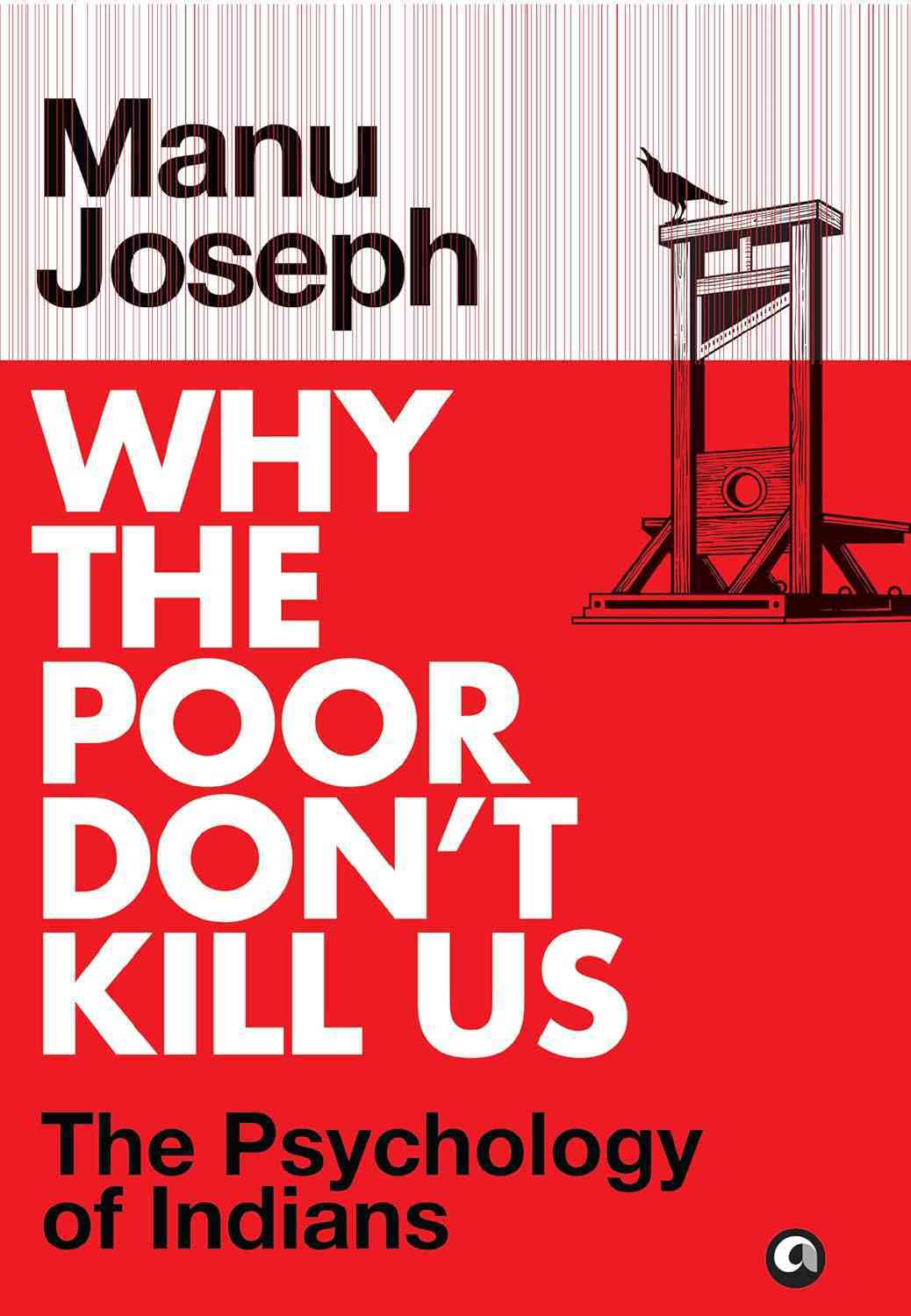
Why the Poor Don’t Kill Us: The Psychology of Indians, Manu Joseph, Aleph Book Company.
